tungsten guide rods
Tungsten guide rods are crucial components‚ leveraging the metal’s unique properties for demanding applications. Their high melting point and strength ensure reliability.
What are Tungsten Guide Rods?
Tungsten guide rods are precision-engineered cylindrical components crafted from tungsten or tungsten alloys. These rods serve as critical guiding elements within various mechanical systems‚ ensuring accuracy and stability during operation. They are distinguished by their exceptional hardness‚ wear resistance‚ and ability to withstand extreme temperatures – properties stemming directly from tungsten’s inherent characteristics.
Unlike conventional steel guides‚ tungsten rods maintain dimensional integrity even under significant stress and heat. This makes them ideal for applications where deformation or material degradation would compromise performance. Their high density and tensile strength further contribute to their reliability in demanding environments‚ offering a superior alternative for precision tooling and high-performance machinery.
Historical Development of Tungsten in Guide Rod Applications
Initially‚ guide rod applications relied heavily on steels‚ but limitations in high-temperature performance and wear resistance spurred exploration of alternative materials. Tungsten’s unique properties began attracting attention in the early 20th century‚ coinciding with advancements in powder metallurgy.
Early adoption focused on specialized tooling and high-temperature furnace components. As manufacturing techniques improved‚ particularly swaging and drawing processes‚ the production of precision tungsten guide rods became more feasible. The demand grew alongside the rise of precision machining and industries requiring robust‚ reliable guidance systems‚ solidifying tungsten’s role as a premier material.
Key Properties of Tungsten for Guide Rods
Tungsten’s exceptional hardness‚ high tensile strength‚ and thermal stability are paramount. Its low thermal expansion and high melting point are also critical.
High Melting Point & Thermal Stability
Tungsten’s extraordinarily high melting point – 3410°C – is a cornerstone of its utility in guide rod applications. This remarkable characteristic allows these rods to maintain structural integrity and functionality even when subjected to incredibly high temperatures‚ far exceeding the limits of most other metals. Coupled with this is tungsten’s exceptional thermal stability; it exhibits minimal expansion or contraction with temperature fluctuations.
This stability is vital for maintaining precision in applications where dimensional accuracy is paramount. The low vapor pressure at elevated temperatures further enhances its reliability in high-heat environments‚ preventing material loss and ensuring consistent performance. These properties make tungsten guide rods ideal for use in high-temperature furnaces and other extreme thermal conditions.
Exceptional Hardness and Wear Resistance
Tungsten guide rods boast exceptional hardness‚ positioning them among the most durable materials available. Significantly harder than traditional steel‚ they demonstrate superior resistance to abrasion‚ erosion‚ and deformation under stress. This inherent hardness translates directly into extended service life‚ reducing the frequency of replacements and minimizing downtime in critical applications.
The remarkable wear resistance of tungsten is particularly valuable in demanding environments involving friction or contact with abrasive substances. This property ensures consistent performance and dimensional stability over prolonged periods‚ even under harsh operating conditions. Consequently‚ tungsten guide rods are favored in applications requiring long-lasting precision and reliability.
High Tensile Strength
Tungsten guide rods exhibit remarkably high tensile strength‚ surpassing that of many other commonly used metals. This crucial property defines the material’s ability to withstand pulling forces without fracturing or undergoing permanent deformation. It’s a key factor in applications where structural integrity under tension is paramount‚ ensuring reliable performance even under significant loads.
This superior strength allows tungsten to maintain its shape and functionality in challenging environments‚ resisting bending or breaking. The inherent robustness of tungsten guide rods contributes to their longevity and dependability‚ making them ideal for applications demanding consistent precision and minimal risk of failure due to tensile stress.
Low Coefficient of Thermal Expansion

Tungsten guide rods possess a notably low coefficient of thermal expansion‚ a critical attribute for maintaining dimensional stability across a wide temperature range. This means they experience minimal expansion or contraction with temperature fluctuations‚ unlike many other materials. This property is vital in precision applications where maintaining tight tolerances is essential.
The reduced thermal sensitivity of tungsten ensures consistent performance in high-temperature environments‚ preventing unwanted movement or distortion; This characteristic minimizes the risk of binding or misalignment‚ contributing to the accuracy and reliability of systems utilizing these rods‚ especially in demanding industrial processes.
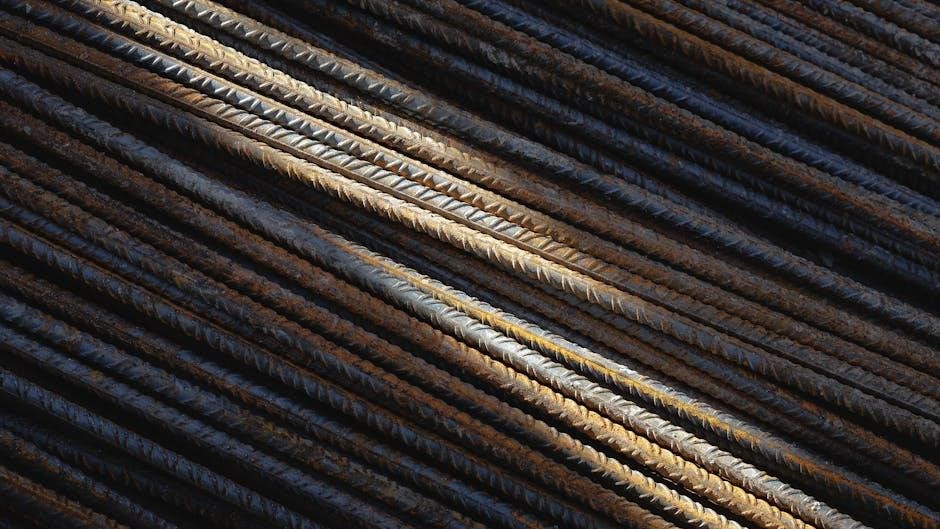
Manufacturing Processes of Tungsten Guide Rods
Tungsten guide rods are created using powder metallurgy‚ swaging‚ and drawing techniques‚ followed by precise machining and specialized finishing processes for optimal results.
Powder Metallurgy Techniques
Powder metallurgy (PM) is a dominant method for crafting tungsten guide rods‚ offering precise control over composition and minimizing waste. This process begins with finely milled tungsten powder‚ which is then compacted into the desired shape using high pressure – often within a die. The compacted ‘green’ part is then sintered at extremely high temperatures‚ typically in a vacuum or controlled atmosphere‚ to fuse the particles together.
Sintering doesn’t fully melt the tungsten‚ but creates a strong‚ dense material. Variations like hot isostatic pressing (HIP) further enhance density and eliminate internal voids. PM allows for complex geometries and is particularly suited for producing rods with consistent properties‚ crucial for demanding applications requiring precision and reliability.
Swaging and Drawing Processes
Swaging and drawing are crucial secondary processes used to refine the dimensions and surface finish of tungsten guide rods produced via powder metallurgy. Swaging involves reducing the diameter of a rod by forcing it through a die‚ utilizing compressive forces. This process improves grain structure and mechanical properties. Subsequently‚ tungsten drawing pulls the rod through a series of progressively smaller dies.
This drawing process achieves precise diameter control and enhances surface smoothness. Lubrication is vital during drawing to reduce friction and prevent galling. These techniques are particularly effective for creating long‚ slender rods with tight tolerances‚ essential for applications demanding high precision and consistent performance.
Machining and Finishing
Machining and finishing are critical final steps in tungsten guide rod production‚ addressing dimensional accuracy and surface quality. Due to tungsten’s inherent hardness‚ specialized techniques like Electrical Discharge Machining (EDM) and grinding are often employed. Conventional cutting tools wear rapidly. Grinding‚ using diamond abrasives‚ achieves tight tolerances and smooth surfaces.
Finishing processes may include polishing to further reduce surface roughness and lapping for exceptional dimensional precision. Surface treatments‚ like coating‚ can enhance corrosion resistance. Careful control during these stages is vital‚ as tungsten is brittle and prone to chipping if improperly handled.

Applications of Tungsten Guide Rods
Tungsten guide rods excel in precision machining‚ high-temperature furnaces‚ electrical contacts‚ and medical imaging due to their robust properties.
Precision Machining & Tooling

Tungsten guide rods are indispensable in precision machining and tooling applications where exceptional durability and accuracy are paramount. Their exceptional hardness and wear resistance significantly extend tool life‚ reducing downtime and operational costs. Unlike traditional steel components‚ tungsten maintains its integrity under intense stress and friction.
This makes them ideal for guiding cutting tools‚ ensuring consistent performance and minimizing deviations. The high tensile strength of tungsten prevents deformation‚ contributing to improved accuracy. Industries benefiting from this include aerospace‚ automotive‚ and die-making‚ where tight tolerances and reliable performance are non-negotiable. Utilizing these rods translates to superior finished products and increased efficiency.
High-Temperature Furnaces
Tungsten guide rods excel in high-temperature furnace environments due to their remarkable thermal properties. Possessing the highest melting point of all metals – 3410°C – they maintain structural integrity even at extreme heat levels where other materials would fail. This inherent thermal stability prevents deformation and ensures consistent performance of furnace components.
Furthermore‚ tungsten’s low coefficient of thermal expansion minimizes dimensional changes with temperature fluctuations‚ crucial for maintaining precise positioning of heating elements and samples. These rods are used as supports‚ guides‚ and structural elements within furnaces used in industries like heat treating‚ semiconductor manufacturing‚ and materials research‚ guaranteeing reliable operation.
Electrical Contacts & Welding
Tungsten guide rods play a vital role in electrical contacts and welding applications‚ capitalizing on their exceptional electrical conductivity and arc resistance. Their high melting point prevents vaporization and contamination during welding processes‚ ensuring clean and stable arcs. This is particularly important in Tungsten Inert Gas (TIG) welding‚ where tungsten electrodes are essential.
Moreover‚ tungsten’s low vapor pressure at elevated temperatures minimizes electrode erosion‚ extending the lifespan of welding components. As guides‚ they maintain precise electrode positioning. In high-current electrical contacts‚ tungsten’s robustness and resistance to wear contribute to long-term reliability and minimal maintenance.
Medical Imaging Equipment
Tungsten guide rods are increasingly utilized in medical imaging equipment‚ notably in X-ray tubes and Computed Tomography (CT) scanners‚ due to their superior properties. Their high density and atomic number effectively attenuate X-rays‚ enhancing image quality and reducing radiation exposure for patients. This shielding capability is critical for precise diagnostics.
Furthermore‚ tungsten’s thermal stability allows it to withstand the intense heat generated during X-ray production. As guides‚ they ensure accurate positioning of components within the imaging systems. The material’s biocompatibility also makes it suitable for certain internal applications‚ contributing to safer and more effective medical procedures.

Advantages of Using Tungsten Guide Rods
Tungsten guide rods offer extended tool life‚ improved accuracy‚ and remarkable resistance to deformation‚ even under extreme conditions and high stress.
Extended Tool Life

Tungsten guide rods dramatically extend tool life due to their exceptional hardness and wear resistance. Unlike traditional steel components‚ tungsten maintains its integrity even during prolonged use in abrasive environments. This inherent durability minimizes the frequency of replacements‚ reducing downtime and associated costs in precision machining and other demanding applications.
The material’s ability to withstand extreme pressures and temperatures without significant degradation contributes to its longevity. This is particularly valuable in high-volume production settings where consistent performance and minimal maintenance are paramount. Investing in tungsten guide rods translates to long-term savings and increased operational efficiency.
Improved Accuracy & Precision
Tungsten guide rods significantly contribute to improved accuracy and precision in various applications. Their low coefficient of thermal expansion minimizes dimensional changes caused by temperature fluctuations‚ ensuring consistent performance. This stability is critical in precision machining‚ where even slight deviations can compromise product quality.
Furthermore‚ the material’s high tensile strength and resistance to deformation prevent unwanted bending or warping under load‚ maintaining alignment and guiding components with exceptional accuracy. Utilizing tungsten rods results in tighter tolerances and more reliable outcomes‚ enhancing overall process control and product reliability.
Resistance to Deformation
Tungsten guide rods exhibit remarkable resistance to deformation‚ a key attribute for applications involving substantial forces or pressures. The material’s exceptional hardness and high tensile strength prevent permanent bending‚ twisting‚ or compression‚ even under extreme conditions. This inherent stability ensures consistent functionality and prolonged operational life.
Unlike softer metals that may yield or distort‚ tungsten maintains its structural integrity‚ providing reliable guidance and support. This characteristic is particularly valuable in high-stress environments‚ where maintaining precise alignment is paramount for optimal performance and preventing costly failures.

Considerations When Selecting Tungsten Guide Rods
Grade‚ dimensions‚ and surface finish are vital selection factors. Precise tolerances and composition impact performance‚ ensuring optimal functionality for specific applications.
Grade & Composition
Tungsten’s purity and alloying elements significantly influence guide rod performance. Higher purity tungsten offers exceptional temperature resistance‚ crucial for furnace applications. However‚ adding elements like rhenium enhances ductility and machinability.
Tungsten carbide grades‚ varying in grain size and cobalt content‚ dictate hardness and wear resistance – vital for precision machining. Selecting the appropriate grade depends on the specific application’s demands. For instance‚ coarser grain sizes offer better toughness‚ while finer grains provide superior surface finish.
Understanding the composition is paramount; even minor impurities can affect mechanical strength and thermal stability. Careful consideration of these factors ensures the chosen guide rod meets the required performance criteria.
Dimensions & Tolerances
Tungsten guide rod dimensions – diameter and length – are critical for proper fit and function within a system. Standard sizes are readily available‚ but custom dimensions are often required for specialized applications. Precise tolerances are equally important‚ particularly in precision machining where even slight deviations can impact accuracy.
Tight tolerances minimize play and ensure smooth‚ consistent movement. Achieving these tolerances with tungsten can be challenging due to its inherent hardness and brittleness‚ necessitating specialized machining techniques. Surface finish also plays a role‚ influencing friction and wear characteristics.
Specifying appropriate dimensional tolerances upfront prevents costly rework and ensures optimal performance of the final product;
Surface Finish Requirements
Tungsten guide rod surface finish significantly impacts performance‚ influencing friction‚ wear‚ and overall system accuracy. A smoother finish minimizes friction‚ extending tool life and improving precision‚ especially in high-speed applications. However‚ achieving a fine surface finish on tungsten is challenging due to its hardness and brittleness.
Common surface finishes range from ground to polished‚ depending on the application’s demands. Polishing reduces surface imperfections‚ while grinding provides a controlled roughness. The required finish dictates the machining processes employed and associated costs.
Specifying the appropriate Ra value (average roughness) is crucial for consistent results and optimal functionality.

Future Trends in Tungsten Guide Rod Technology
New alloys and advanced manufacturing techniques are poised to enhance tungsten guide rod performance‚ expanding applications and improving material properties significantly.
Development of New Alloys
Ongoing research focuses on creating tungsten alloys that overcome pure tungsten’s inherent brittleness. Incorporating elements like rhenium‚ hafnium‚ or molybdenum enhances ductility and toughness without sacrificing the crucial high melting point. These advancements aim to broaden the applicability of tungsten guide rods in high-stress environments.
Furthermore‚ scientists are exploring nano-structured tungsten alloys‚ promising even greater strength and wear resistance. These new compositions are designed to improve performance in precision machining and high-temperature applications‚ pushing the boundaries of what’s achievable with tungsten guide rods. The goal is to tailor material properties for specific industrial needs.
Advanced Manufacturing Techniques
Innovative manufacturing processes are revolutionizing tungsten guide rod production; Additive manufacturing‚ like 3D printing‚ allows for complex geometries and reduced material waste‚ offering customized solutions. Spark plasma sintering (SPS) enables rapid consolidation of tungsten powders at lower temperatures‚ preserving grain structure and enhancing properties.
Furthermore‚ advanced swaging and drawing techniques are improving surface finish and dimensional accuracy. These methods‚ combined with precision machining‚ result in tungsten guide rods with superior performance characteristics. These techniques are crucial for meeting the demands of industries requiring high precision and reliability.