
biography of elon musk pdf
Explore the free PDF of “Elon Musk” by Walter Isaacson, a 803-page biography released 28 Aug 2026. Available in PDF and EPUB, it weighs 91.8 MB and offers instant download or online reading, detailing Musk’s journey from South Africa to U.S. tech ventures. Download via BDeBooks or Scribd, also as a text file no
Primary Source: Walter Isaacson’s Biography
Walter Isaacson’s biography of Elon Musk, released on 28 August 2026, is a comprehensive 803‑page narrative that chronicles Musk’s life from his childhood in South Africa to his groundbreaking ventures in the United States. The book is available in PDF and EPUB formats, with a file size of approximately 91.8 MB, and can be downloaded instantly or read online through platforms such as BDeBooks and Scribd. Isaacson’s work draws on extensive interviews, corporate archives, and Musk’s own public statements, providing readers with an in‑depth look at the entrepreneur’s vision, challenges, and impact on technology and society. The biography covers key milestones, including the founding of Zip2, the rise of PayPal, the launch of Tesla Motors, the establishment of SpaceX, the development of Neuralink, and the controversial acquisition of Twitter. Isaacson’s narrative style combines rigorous research with engaging storytelling, making the book accessible to both casual readers and industry professionals. The PDF version is free to download, offering a convenient way for enthusiasts to explore Musk’s journey in detail.
Isaacson, known for his biographies of Benjamin Franklin, Albert Einstein, and Leonardo da Vinci, brings a meticulous approach to the Musk narrative. He spent over a year conducting interviews with Musk, his family, colleagues, and competitors, and accessed internal company documents that shed light on the decision‑making processes behind each venture. The biography places Musk’s work in the context of renewable energy, space exploration, and AI, showing his influence on modern innovation for all and the future!
Early Life and Education
Elon Musk was born in Pretoria, South Africa, in 1971. He earned a BSc in physics and economics from the University of Pretoria, then moved to Canada in 1989 to study at Queen’s University, later transferring to the University of Pennsylvania, where he received dual M.S. degrees and
South African Roots and Childhood
Elon Musk was born on 28 June 1971 in Pretoria, South Africa, to a Canadian mother, Maye, a former model and dietitian, and a South African father, Errol, an electromechanical engineer. Growing up in a modest household, Musk developed an early fascination with technology and reading. At age 12, he taught himself programming, creating the game Blastar, which he sold for $500. His childhood was marked by a blend of academic curiosity and entrepreneurial spirit, foreshadowing his future ventures. He attended Pretoria Boys High School, where he excelled in mathematics and physics, and later studied at the University of Pretoria before moving to Canada for higher education. The South African environment, combined with his family’s diverse background, laid the foundation for his global vision and relentless drive.
Academic Pursuits in South Africa and Canada
After completing secondary education at Pretoria Boys High School, Elon Musk enrolled at the University of Pretoria, where he studied physics and economics. His tenure there was brief; he transferred to the University of Cape Town to pursue a degree in economics and physics, but found the curriculum too rigid for his entrepreneurial ambitions. In 1989, he left South Africa and moved to Canada, enrolling at Queen’s University in Kingston, Ontario. There, he completed a two‑year undergraduate program, focusing on physics and economics, before transferring to the University of Pennsylvania. At Penn, Musk earned dual bachelor’s degrees in physics and economics from the Wharton School, graduating in 1995. His academic journey, marked by a blend of rigorous coursework and a relentless curiosity, laid the groundwork for his later ventures in technology and space exploration. Musk’s early exposure to diverse educational systems—from the structured South African schools to the more flexible North American universities—shaped his ability to think across disciplines, a skill that would become a hallmark of his career. Throughout his studies, he maintained a habit of self‑directed learning, often spending evenings reading advanced texts on computer science, engineering, and business strategy, which later proved invaluable when he founded Zip2 and other startups. The combination of formal education and autodidactic exploration equipped Musk with the analytical tools and innovative mindset necessary to challenge conventional industries and pursue ambitious projects such as electric vehicles, reusable rockets, and brain‑machine interfaces. This foundation in both science and economics remains a cornerstone of his approach to problem‑solving and risk management.

Entrepreneurial Beginnings
Elon Musk’s first venture, Zip2, launched in 1996, offered city guides to newspapers. After selling to Compaq for $307M, he co‑founded X.com, later PayPal, revolutionizing online payments. These early successes set the stage for future tech empire. His vision paved ventures now.
Zip2 Corporation

Founded in 1996 by Elon Musk and his brother Kimbal, Zip2 was a pioneering online city guide platform that merged maps, business directories, and editorial content for newspapers. The company secured contracts with major publications such as The New York Times and The Chicago Tribune, providing them with interactive maps and local business listings that enhanced reader engagement and generated new advertising revenue streams. Zip2’s technology leveraged proprietary algorithms to deliver real‑time, location‑based information, a concept that was revolutionary at the time. In 1999, Compaq acquired Zip2 for $307 million in cash and $34 million in stock, valuing the company at $1.6 billion. This acquisition not only validated Musk’s vision of a digital future but also provided him with the capital and credibility to pursue subsequent ventures, including X.com, which evolved into PayPal. The Zip2 experience taught Musk the importance of scalable infrastructure, customer‑centric design, and strategic partnerships, lessons that would later underpin the success of Tesla, SpaceX, and other enterprises. Musk’s role as CEO and chief technology officer during Zip2’s formative years involved overseeing product development, securing venture capital, and negotiating key media contracts, all while navigating the rapidly evolving internet landscape of the late 1990s. The company’s legacy is evident in today’s ubiquitous mapping services and online business directories, which owe their origins to Zip2’s early innovations in geospatial data integration and user‑friendly interfaces. Zip2’s rapid growth attracted investors like Sequoia Capital, which provided crucial funding and mentorship. The company’s innovative use of web‑based mapping set a precedent for future GIS platforms, influencing how businesses and consumers interact with geographic information online. It remains a cornerstone—still vital!!
PayPal and Online Payment Revolution
After the sale of Zip2, Elon Musk founded X.com in 1999, an online payment company that aimed to simplify money transfers over the internet. X.com’s early platform integrated email‑based transactions, allowing users to send funds to anyone with an email address. In 2000, X.com merged with Confinity, the creators of the money‑transfer PayPal. Musk became CEO of the combined entity, steering it toward a consumer‑friendly, secure payment gateway that could compete with traditional banking systems. By 2001, PayPal had introduced a single‑click checkout process, enabling e‑commerce merchants to accept payments without requiring customers to enter credit‑card details repeatedly. This innovation dramatically increased conversion rates and reduced cart abandonment across online marketplaces such as eBay, which became a major partner. The company’s focus on fraud detection and buyer protection built trust among users, while its developer APIs encouraged third‑party integration, fostering an ecosystem of merchants and developers. In 2002, eBay acquired PayPal for $1.5 billion in stock, cementing its position as the dominant online payment platform. Musk’s leadership during this period was marked by aggressive scaling global expansion and the introduction of mobile payment solutions. PayPal’s success laid the groundwork for Musk’s future ventures by demonstrating the viability of large‑scale, technology‑driven financial services and by providing the capital and credibility needed to launch Tesla, SpaceX, and other ambitious projects. The legacy of PayPal’s rapid growth and user‑centric design continues to influence modern fintech solutions, underscoring the transformative impact of digital payments on global commerce.

Revolutionizing Transport and Space
Elon Musk’s ventures reshape mobility and exploration. Tesla’s electric cars accelerate transit, while SpaceX’s reusable rockets slash launch costs, enabling Mars missions. Neuralink and Starlink extend human reach, illustrating Musk’s vision of a multi‑planetaryfuture.
Tesla Motors and Electric Vehicles
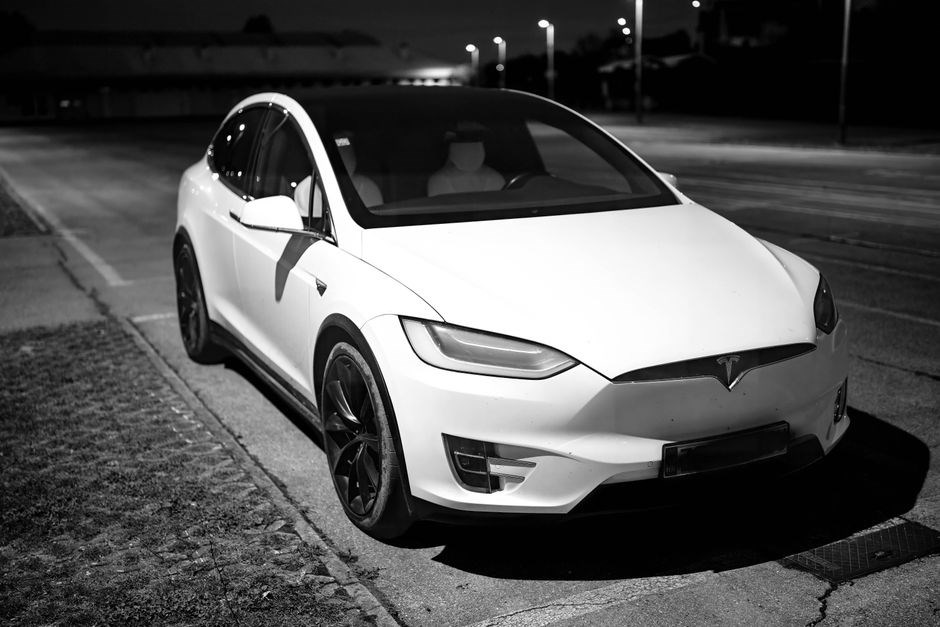
Tesla’s first model, the Roadster, proved electric performance could rival gasoline cars, setting a benchmark for range and acceleration. Subsequent models—Model S,Model 3, Model X, and Model Y—expanded market segments, from luxury sedans to affordable mass‑market vehicles. Tesla’s Supercharger network, a global infrastructure of fast‑charging stations, underpins long‑range travel and reduces range anxiety. The company’s software ecosystem, featuring over‑the‑air updates, enhances vehicle capabilities post‑purchase, while Autopilot and Full Self‑Driving options push autonomous driving research. Tesla’s battery technology, notably the 4680 cell, promises higher energy density and lower cost, accelerating the transition to electric mobility. The company’s vertical integration—from battery manufacturing at Gigafactories to vehicle assembly—optimizes supply chains and reduces dependency on external suppliers. Musk’s leadership style, characterized by aggressive timelines and a relentless focus on innovation, has driven rapid product cycles, though it has also sparked debate over labor practices and safety standards. Despite controversies, Tesla’s influence on the automotive industry is undeniable, inspiring traditional manufacturers to accelerate their EV strategies and prompting global policy shifts toward decarbonization. The biography highlights how Tesla’s success reshaped consumer expectations, proving electric vehicles can be desirable, high‑performance, and accessible at scale. Tesla’s expansion into energy storage with Powerwall and Powerpack demonstrates a holistic approach to clean energy and power from renewablesdaily.
SpaceX and Space Exploration


SpaceX, founded in 2002, set out to reduce space transportation costs and enable Mars colonization. The Falcon 1, Falcon 9, and Falcon Heavy rockets introduced reusable first stages, dramatically cutting launch expenses. The company’s Dragon spacecraft, first cargo resupply missions to the International Space Station in 2012, evolved into crewed Dragon 2, carrying astronauts under NASA’s Commercial Crew Program. SpaceX’s Starlink constellation, comprising thousands of low‑Earth orbit satellites, provides global broadband, generating revenue that fuels further exploration. The Starship prototype, a fully reusable super‑heavy launch vehicle, aims to transport humans and cargo to Mars, with test flights demonstrating high‑altitude flight and controlled re‑entry. Musk’s vision of a “multi‑planetary” future drives investment in propulsion, life‑support systems, and autonomous landing technologies. The company’s rapid iteration cycle, using data from each test to refine designs, exemplifies a lean engineering approach. SpaceX’s partnerships with NASA, the U.S. Department of Defense, and commercial customers expand its payload capacity and market reach. The biographical PDF highlights how SpaceX’s milestones—from the first privately funded orbital launch to the first commercial crewed flight—have reshaped the aerospace industry, inspiring a new era of private spaceflight and rekindling public interest in interplanetary travel. With each launch, SpaceX not only advances technology but also redefines humanity’s relationship with the cosmos, demonstrating that bold ambition, relentless testing, and a commitment to sustainability can transform the impossible into everydayreality.
Neuralink and Brain‑Machine Interfaces
Neuralink, launched in 2016, aims to create high‑bandwidth, low‑latency brain‑computer interfaces that could treat neurological disorders and eventually enable symbiosis with artificial intelligence. The company’s flagship device, a flexible “neural lace,” consists of ultra‑thin, biocompatible electrodes that can be implanted through a robotic surgical system. In 2020, Neuralink demonstrated a pig with a fully functional implant that recorded real‑time neural activity while the animal performed simple tasks. By 2021, the company announced a human trial, in which a volunteer with a spinal cord injury used the implant to control a computer cursor via thought alone. The technology relies on a combination of micro‑electrode arrays, wireless telemetry, and machine‑learning algorithms to decode neural signals into actionable commands. Neuralink’s vision extends beyond medical applications; Musk envisions a future where humans can augment their cognition, share memories, and interface digital devices. The company has filed numerous patents covering electrode design, signal‑processing hardware, and surgical robotics. Critics raise concerns about safety, data privacy, and ethical implications of invasive neural technology. Nevertheless, Neuralink’s rapid prototyping, rigorous pre‑clinical testing, and public demonstrations illustrate a bold attempt to bridge biology and silicon, potentially transforming both neuroscience research and human‑machine interaction paradigms.
Future goals include scaling the neural lace to millions of neurons and ensuring ethical governance and oversight!!!!
Twitter Acquisition and Controversy
In April 2022, Elon Musk announced a $44 billion takeover of Twitter, sparking intense debate over free‑speech principles, platform governance, and corporate responsibility. Musk’s bid, backed by a consortium of investors, was finalized in July, after a contentious legal battle that saw the company’s board initially reject the offer. The acquisition triggered a wave of executive and staff departures, including chief technology officer Parag Agrawal and head of policy. Musk’s subsequent policy shifts—such as reinstating previously banned accounts and loosening content moderation—prompted criticism from advertisers, regulators, and civil‑rights groups. The platform’s revenue model faced uncertainty as major advertisers pulled out, citing brand safety concerns. Musk’s public statements on Twitter, often unfiltered and provocative, led to legal scrutiny over defamation claims and securities‑law violations. The company’s data‑privacy practices also came under the microscope, with questions about user consent and algorithmic transparency. Amid these controversies, Musk pledged to create a “free‑speech” environment, yet faced calls to balance that vision with protection against hate speech and misinformation. The acquisition remains a polarizing chapter in Musk’s career, illustrating the tension between entrepreneurial ambition and social responsibility in the digital age.The episode highlights the tension between Musk’s push for open discourse and the demands of platform moderation and trust!!